


Designing Hotel Websites that Get Direct Bookings!

Contents
Why Your Hotel Website is Your Most Important Asset: Driving Direct Bookings
Designing for a Seamless User Experience: What Makes a Good Hotel Website?
Visual Storytelling and Branding: Showcasing Your Hotel's Charm
Streamlining the Booking Journey: Designing Your Hotel Booking Website
Search Engine Visibility (SEO): Getting Your Hotel Website Noticed
Building Trust and Authority (EEAT): Enhancing Your Hotel Web Credibility
Engaging and Unique Features: Standing Out Among Hotel Websites Examples
Content That Connects: Crafting Compelling Content for Hotel Website
Website Accessibility: Ensuring Your Hotel Website is Inclusive
Seamless Integrations: Connecting Your Hotel Website to Key Systems
Hotels no longer exist just in physical landscapes; they also have a digital presence. A simple Google search of any hotel reveals its reviews (both good and bad), links for booking via different OTAs (such as Booking.com and Hotels.com), and any other information it may have accumulated, including the hotel’s website.
Considering this, you would expect the hotel website to be top-notch. However, most properties online have a basic website, with the majority just sharing information without even a 'Book Now' button.
So why is that a platform where hoteliers and homestay owners can get direct bookings with ZERO commission is so often neglected? Mostly because there isn't enough information on how to create a hotel website that converts.
This article covers everything required when creating a hotel website, including SEO, booking engines, storytelling through copywriting, and more! Whether you're looking for simple hotel website design principles or exploring luxury hotel website design, this guide is for you.
Why Your Hotel Website is Your Most Important Asset: Driving Direct Bookings
Your hotel website is more than just an online brochure; it's a vital marketing tool for attracting online visitors and converting them into paying guests.
While "conversion" can include inquiries or newsletter sign-ups, the primary goal is typically to secure direct bookings. This means cutting out the middleman – the OTAs – and keeping that commission in your pocket.
Investing wisely in your hotel website design and functionality is key to maximising revenue. Effectively, your website is your most valuable digital asset.

Designing for a Seamless User Experience: What Makes a Good Hotel Website?
Making it easy for potential guests to find information and book a room or property is paramount. An intuitive and clear navigation is fundamental. A well-organised menu with clear labels for key sections like "Rooms," "Dining," "Amenities," and "Contact" is crucial. If users get lost or frustrated, they'll likely leave. This is a core part of what makes a good hotel website.
Placing vital information and features "above the fold" (visible without scrolling) is recommended. This ensures crucial elements, such as the booking button and captivating visuals, are immediately visible, encouraging action.
The "Book Now" button's prominence on every page cannot be overstated; make it easy to find and click using contrasting colours and clear text. For larger sites, a search bar can also significantly improve the user experience.
Mobile-First: Essential for Modern Hotel Website Design
Today, a large percentage of online travel research and bookings happens on mobile devices. Your hotel's web presence must be designed with a mobile-first approach, prioritising the user experience on smartphones and tablets.
Ignoring mobile users means missing out on a significant share of potential customers, as statistics show that mobile devices accounted for about 63.8% of global website traffic in 2025. A responsive design that adapts seamlessly to all screen sizes is essential.
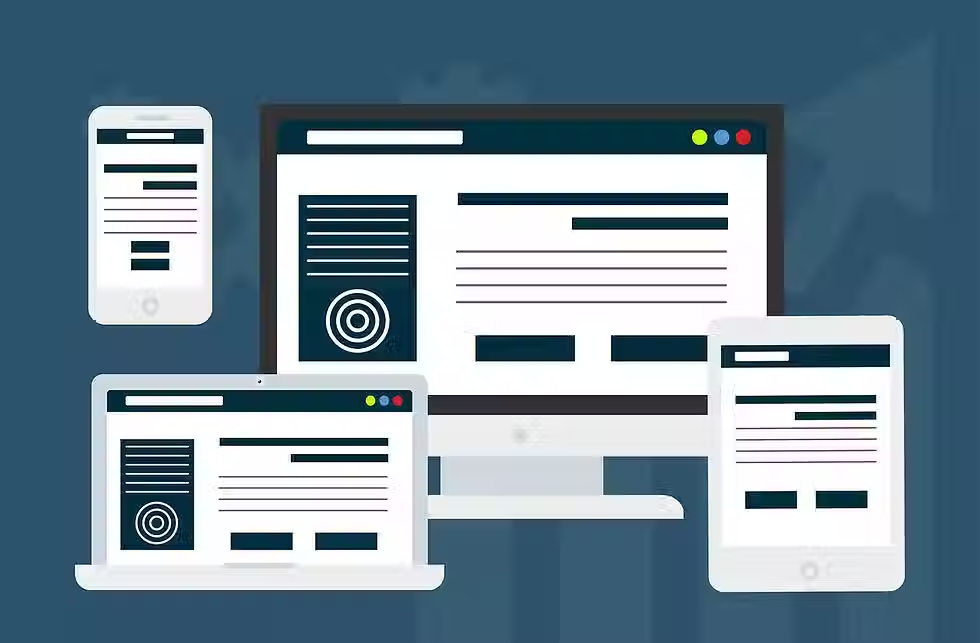
Slow loading times on mobile (under 3 seconds) can lead to high bounce rates. Optimise images and code for speed. Navigation on mobile should be intuitive and easy to use with touchscreens, often utilising a hamburger menu to keep it clean. Ensure buttons are large and easy to tap. This is critical for effective mobile-friendly hotel website design templates.
Visual Storytelling and Branding: Showcasing Your Hotel's Charm
High-quality photography is essential. Stunning images of your rooms, amenities, and surroundings evoke emotion and inspire bookings. Poor-quality images can make your hotel seem unappealing or untrustworthy. Include a gallery of high-resolution photos and consider a professional video.
Highlight unique views or distinctive amenities through compelling photographs. This visual storytelling is a key element of the best hotel website design.
Consistent branding is also crucial: use the same logo, colour palette, and typography across your site to align with your overall brand identity. A minimalist design with plenty of white space can improve readability and focus attention on your high-quality visuals. This approach is often seen in beautiful hotel website examples.
Streamlining the Booking Journey: Designing Your Hotel Booking Website
A smooth booking process is crucial for converting visitors. Seamless integration with a reliable booking engine is paramount. Avoid redirecting users to an external site; embed the booking engine directly to maintain a consistent user experience and build trust. This is the core of effective hotel booking website design.
Transparency in pricing and availability is vital. Hiding rates or making it hard to check availability frustrates potential guests. Minimise the steps required to complete a reservation to reduce abandonment rates. Offer customisation options, such as extras and upgrades, to enhance the guest experience and potentially increase revenue.
Ensuring the security of online transactions is paramount. Your booking engine must use a secure payment gateway to protect financial information. Displaying security badges builds trust. Providing clear booking confirmation details and pre-arrival information enhances the guest experience.
Search Engine Visibility (SEO): Getting Your Hotel Website Noticed
Search engines like Google are a primary source of traffic for hotel websites. SEO is well-documented for improving online visibility and driving organic visits. Optimising for relevant keywords helps attract potential guests actively searching for accommodation in your area.
Keyword research helps identify the terms your target audience uses. Use these keywords in your page titles, headings (like the ones in this article), meta descriptions, image alt text, and body content (on-page optimisation). Unique titles and descriptions are key.

Technical SEO elements like clean code, HTTPS, a comprehensive sitemap, and fast page speeds are crucial for rankings. Local SEO is particularly important for hotels, including optimising your Google My Business profile, actively encouraging customer reviews, and including your hotel's address and phone number on your website.
Content marketing, such as blog posts about local attractions or travel guides, can attract organic traffic and establish your hotel as a knowledgeable resource. This is part of writing content for hotel websites that performs well.
Building Trust and Authority (EEAT): Enhancing Your Hotel Web Credibility
Google's E-E-A-T guidelines – Experience, Expertise, Authoritativeness, and Trustworthiness – are increasingly important signals for search engines when determining the quality and reliability of a hotel website. While not strictly in the "Your Money or Your Life" category, demonstrating these principles can significantly benefit your hotel website's ranking and, crucially, build confidence with potential guests.
Here's how you can demonstrate E-E-A-T on your hotel website:
Experience: Showcasing your hotel's history, how long you've been in business, and any unique experiences you offer guests helps demonstrate your experience. A powerful way to do this is by featuring guest testimonials and reviews, providing social proof of positive experiences.
Expertise: This can be demonstrated by highlighting the knowledge and skills of your hotel's staff and management team. Consider featuring staff profiles or including a blog where team members share insights about the local area, travel tips, or your hotel's services. This builds credibility with potential guests.
Authoritativeness: Position your hotel as a leading accommodation provider in your area. Earning mentions and backlinks from reputable travel websites, local tourism boards, or relevant publications can signal to Google and users that your website is a credible source of information.
Trustworthiness: This is crucial. Ensure your hotel website is secure by using HTTPS. Providing clear and easily accessible contact information, privacy policies, and terms of service significantly contributes to building trust. Prominently displaying genuine customer reviews and testimonials on your website, perhaps embedding a widget from review platforms like TripAdvisor or Google Reviews, acts as powerful social proof.
Transparency and clear policies, alongside positive reviews, reassure potential guests that your hotel is reliable. A detailed and informative "about us page content for hotel website" that shares your hotel's story, core values, and information about your team can also build trust and create a stronger connection.
By actively focusing on demonstrating experience, expertise, authoritativeness, and trustworthiness, you cultivate a credible and reliable online presence that resonates positively with both users and search engines.
Engaging and Unique Features: Standing Out Among Hotel Websites Examples
To make your hotel website stand out, consider adding engaging features. Subtle animations and interactive elements can add a dynamic feel, but use them carefully to avoid overwhelming visitors or slowing down the site.
Virtual tours allow potential guests to explore your property remotely, increasing booking confidence. Personalised recommendations or experiences can make guests feel more valued.
Integrating a chatbot can provide instant support and answer common questions. Highlighting local experiences and attractions through guides or interactive maps adds value. For a global audience, offer multi-language options. Consider accessibility features such as voice search. Looking at hotel website examples can inspire these features.
Content That Connects: Crafting Compelling Content for Hotel Website
Content should be informative, well-written, and engaging. Focus on the unique aspects of your hotel and the experiences you offer. People buy stories and experiences. Provide comprehensive details about each room type, including size, amenities, photos, and pricing. This is essential content for a hotel website.
Clearly list all hotel amenities and services to showcase the overall value. Include information about nearby attractions and transportation. Maintaining a blog or news section keeps the hotel website's content fresh and engages potential guests. Prominently display special offers and packages. Effective writing content for hotel websites speaks directly to the needs and desires of your target audience.
Website Accessibility: Ensuring Your Hotel Website is Inclusive
Ensuring that your hotel website is accessible to all users, including those with disabilities, is ethically important and good business practice. Adhere to guidelines like the Web Content Accessibility Guidelines (WCAG) 2.1 Level AA.
Key aspects include screen reader compatibility (using alt text for images), keyboard navigation, video captions, sufficient colour contrast, clear forms, resizable text, proper use of headings, and avoiding flashing content. Regularly test your site for accessibility and provide clear information about your hotel's accessibility features.
Tracking Your Success: Measuring Hotel Website Performance
To ensure your website meets your goals, track key performance indicators (KPIs). Important metrics include:
Website sessions: Total visits.
Website conversion rate: Percentage of visitors completing a desired action (like booking).
Time on page: Indicates engagement.
Bounce rate: Percentage of visitors leaving after one page (high rate may indicate issues).
Search engine rankings: Your position for relevant keywords.
Direct booking conversion rate: Percentage of visitors who book directly.
Visitor to booking engine rate: Percentage of visitors accessing the booking engine.
Booking engine to booking rate: Percentage of users who start a search and complete a reservation.
Average Daily Rate (ADR): Revenue per occupied room from website bookings.
Revenue per available room (RevPAR): Total room revenue per available room from the direct channel (RevDirect).
Bookings and revenue by channel: Compare direct bookings to those from other channels, such as OTAs.
Mobile conversion rate: Conversion specifically for mobile users.
Website loading speed: Faster is better for user experience and SEO.
Utilise analytics tools like Google Analytics to track these metrics and optimise your site
Seamless Integrations: Connecting Your Hotel Website to Key Systems
Integrating your hotel website with other essential systems can significantly streamline your operations and enhance the guest experience. Key integrations to consider include:
Booking Engine: Seamless integration with a reliable booking engine is crucial for direct bookings. It should ideally be embedded within your site for a consistent user experience.
Property Management System (PMS): Connecting your website to your PMS enables real-time availability and rate updates, as well as automated reservation management. This prevents overbookings and ensures accurate information for guests.
Channel Manager: If you list on Online Travel Agencies (OTAs), a channel manager integration ensures consistent availability and rates across all platforms, saving time and reducing errors.
Payment Gateways: Integrating with secure gateways lets you process online payments safely and efficiently.
Customer Relationship Management (CRM) System: A CRM integration helps you collect and analyse guest data, enabling personalised communication and targeted marketing efforts. This is key to building loyalty and encouraging repeat direct bookings.
Guest Messaging Platforms: Integration allows real-time communication with guests via chat or other messaging channels.
Review Platforms: Embedding widgets from platforms like TripAdvisor or Google Reviews directly on your site showcases recent guest feedback.
Email Marketing Platforms: Integration allows you to build email lists and send targeted promotions.
Analytics Tools: Integration with tools like Google Analytics provides valuable data on website traffic and user behaviour.
Navigating the world of hotel technology and ensuring these systems talk to each other can be complex.

Choosing the right integrations can automate tasks, improve efficiency, and provide a better experience for both your staff and your guests. Ensuring these integrations are facilitated via a robust API is key to reliable connectivity.
Investing in Your Hotel Website for Long-Term Success
Creating a successful hotel website design for direct bookings requires a blend of visual appeal, a seamless user experience, efficient booking processes, informative content, robust technical optimisation, a focus on building trust and authority, and a commitment to accessibility. Your website hotel is a critical tool for attracting bookings and maximising revenue.
By prioritising these elements, utilising seamless integrations with key systems, and leveraging resources to find the right technology partners, you can create a powerful online presence that converts visitors into loyal guests.
Remember, the digital landscape evolves, so continuous improvement and adaptation are key to long-term success. Investing in your online presence through expert hotel website design is an investment in your hotel's future.
Looking at the best hotel websites and the best hotel website designs can provide inspiration, whether you're aiming for a simple hotel website design, a luxury hotel website design, or a boutique hotel website design.
Exploring sample hotel websites and hotel website examples can also be beneficial, keeping an eye on current hotel website trends.

Comments